
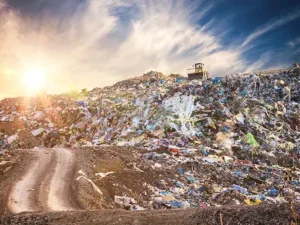
 Municipal solid waste
 Commercial and industrial waste
 Construction and demolition waste
 Post-consumer plastic bag opening
 Waste wood & wood stumps
 Bulky waste
 Paper and cardboard
 RDF/SRF
 Plastic waste
Shredding in 2026: Smaller volumes, sharper demands in Europe
Across Europe, shredding has moved on from the idea of one robust machine that can handle everything. As European plants invest more heavily in sorting, they are working with smaller volumes of cleaner, more defined fractions. That shift is redefining what performance means in practice.
This is the development Jens Peter Martensen, Head of EMEA at M&J Recycling, sees across European markets.
“In the past, many facilities needed a machine that could take a punch. Mixed waste. Large volumes. Constant variation. The task was to keep material moving,” he explains.
That requirement has not disappeared. Many European operators still process demanding waste streams where strength and torque are decisive. But sorting is increasingly doing more of the heavy lifting. And that changes how force must be applied.
Cleaner input, different expectations
With improved source separation and more advanced sorting lines across Europe, heavily contaminated mixed waste is no longer the default in many facilities. Instead, operators are handling more specific fractions.
That often reduces the need for the very largest machines designed solely to absorb extreme variation.
“We’re seeing more cases where 20–30 tonnes per hour is enough,” Jens Peter notes. “Meeting capacity targets is still essential. But in today’s European market, correct dimensioning and configuration are what secure stable and predictable performance.”
The discussion therefore shifts from maximum machine size to correct sizing and setup. Not less power – but the right balance between torque, speed and cutting configuration for the material in question. When the machine is correctly sized and configured, performance and cost efficiency go hand in hand, ensuring a strong return on the investment.
Output quality sets the standard
As input streams become more defined, expectations downstream in European recycling and fuel preparation plants become stricter.
Recycling lines and fuel production processes increasingly require a specific output size and consistent cut characteristics. That brings machine configuration into sharper focus. Knife type, knife count, rotor size and cutting principle directly influence the final fraction.
“If the machine is simply too big for the job, it can affect the result,” Jens Peter says, “especially when the output specification is tight.”
Shredding is no longer just about reducing size. It is about producing a predictable fraction that supports the next processing step. The right cutting force, applied in the right way, becomes more important than raw capacity alone.
Energy performance under scrutiny
Energy consumption has moved higher up the agenda across Europe. ESG targets, regulatory pressure and internal reporting requirements have made energy performance more visible at board level.
At the same time, disposal and treatment costs continue to rise in many European countries.
“The overall driver is still what it costs to get rid of waste,” Jens Peter explains. “And that cost is only going up.”
For operators, these factors converge. Stable performance, predictable energy use and correct sizing are no longer technical preferences. They are economic necessities.
This is where flexibility in configuration becomes decisive. At M&J Recycling, we combine high-torque cutting power with one of the broadest selections of pre-shredder sizes, motor options, drive concepts and knife combinations in the market. That allows us to match torque, cutting system and speed precisely to the fraction and downstream requirement rather than relying on a single standard setup.
Because in 2026, shredding performance in Europe is not defined by brute capacity alone. It is defined by how intelligently that power is applied.
Curious how your current setup compares?
Our experts are ready to help analyse your waste composition and operational needs to find the best matching shredder.
Speak to our team about your waste stream and downstream requirements.